
- SB 54: California's extended producer responsibility (EPR) law for packaging — shifts packaging-waste costs from taxpayers to producers.
- In effect since 2023, but real enforcement starts January 1, 2027 — mandatory compliance program participation from that date.
- Source-reduction targets escalate in three stages: 10% by 2027, 20% by 2030, 25% by 2032.
- PCR content capped at 8% of that target; a separate recycling-rate goal of 65% by 2032 applies to single-use plastic packaging and food service ware.
- Two lawsuits are pending, but neither has paused enforcement — compliance planning continues on the current timeline.
SB 54 — the Plastic Pollution Prevention and Packaging Producer Responsibility Act — is California's extended producer responsibility (EPR) law for packaging. It shifts the cost and responsibility for packaging waste away from local governments and taxpayers and onto the producers who put that packaging on the market. In practice, this means producers must register with a state-approved program, report how much packaging they sell, and work toward escalating reduction and recycling targets.
The law has technically been in effect since January 1, 2023, but real enforcement had to wait for finalized rules. Those rules didn't arrive until this year, when California's Office of Administrative Law approved SB 54's permanent regulations on May 1, 2026.
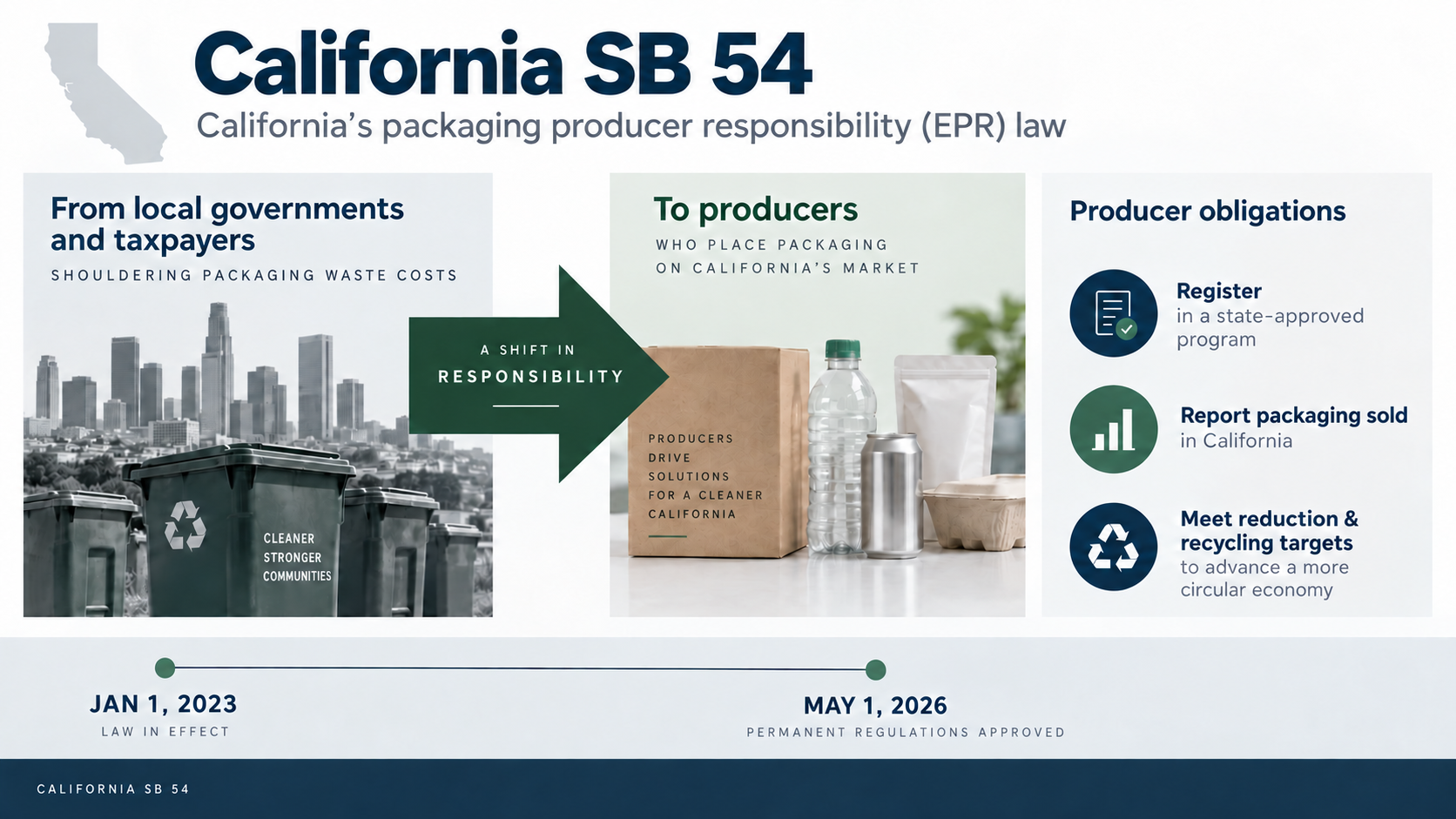
As of September 2026, SB 54's compliance timeline is built around three dates: 2027, 2030, and 2032. At each date, two thresholds tighten: how much single-use plastic packaging a producer can sell into the California market, and how much of that reduction must come from reuse or elimination rather than simple recycling. This is what SB 54 calls source reduction — cutting the total amount of packaging material used, not just recycling more of it.
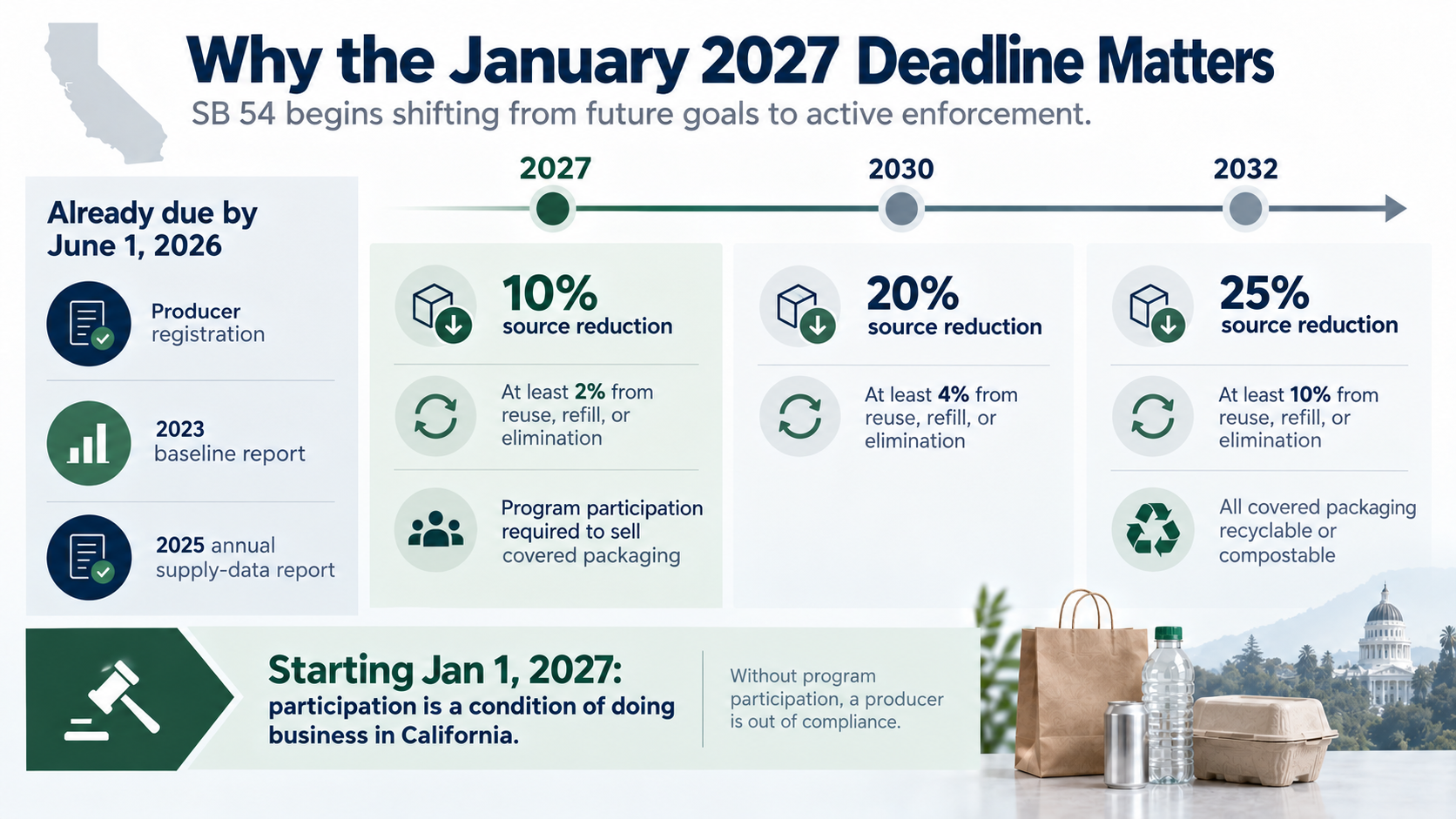
By 2027, producers must cut packaging by 10% from their 2023 baseline, with at least 2% of that coming from reuse, refill, or elimination. That target rises to 20% (4% minimum) by 2030, and 25% (10% minimum) by 2032 — the same year all covered single-use packaging must be either recyclable or compostable.
Three requirements were already due by June 1, 2026: producer registration, the finalized source-reduction baseline report (using 2023 data), and the first annual supply-data report (using 2025 data). From January 1, 2027 onward, program participation becomes a hard condition of doing business in the state — a producer that sells covered packaging without it is out of compliance. That's the point where SB 54 stops being a set of future targets and becomes active enforcement.
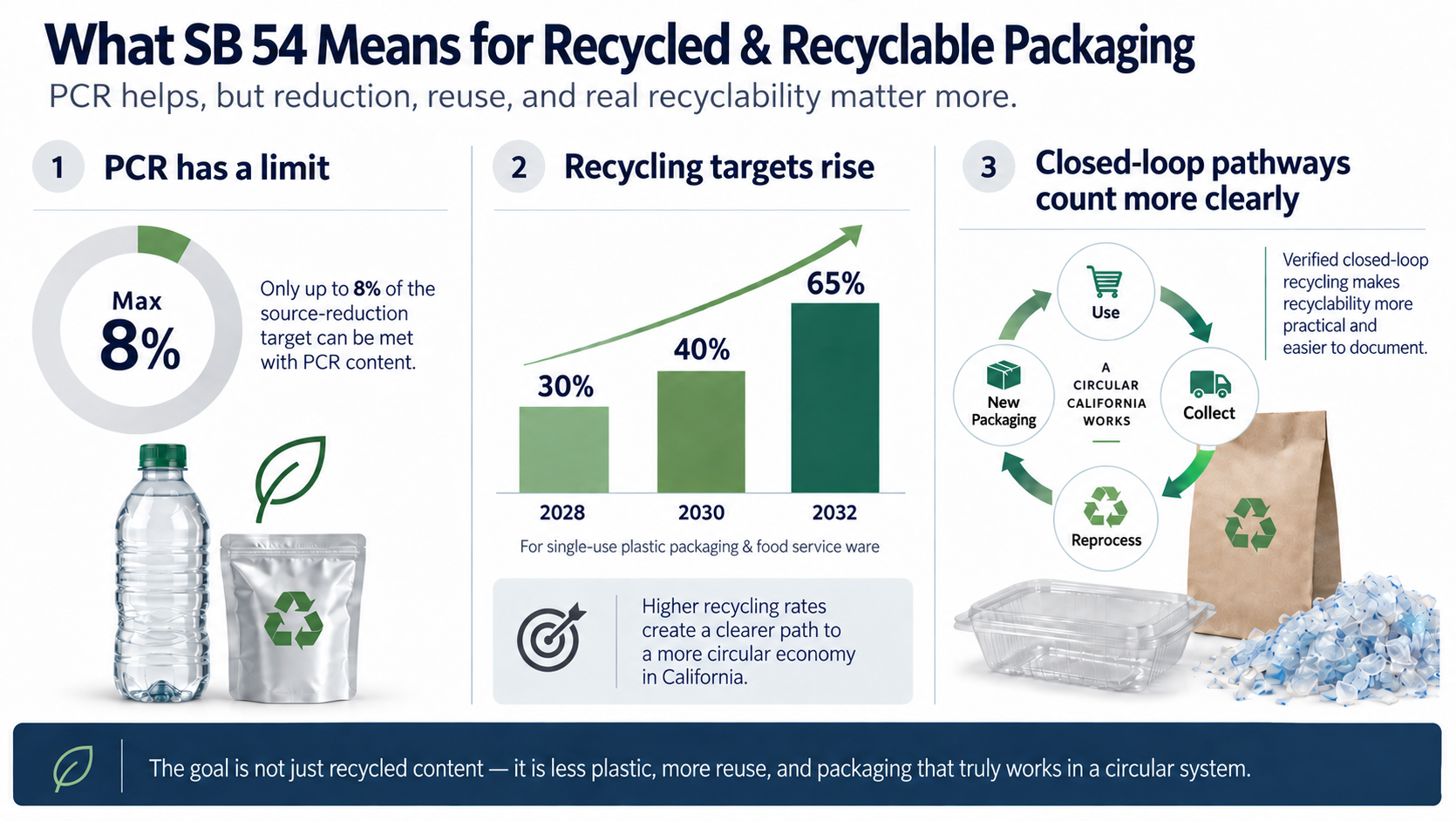
SB 54 limits how much of a producer's source-reduction target can be met through post-consumer recycled (PCR) content alone. The cap is 8% at every stage through 2032. That ceiling is deliberate: California wants source reduction and reuse to carry most of the weight, not recycled content standing in for an actual reduction in plastic use.
SB 54 also sets separate recycling-rate targets — 30% by 2028, 40% by 2030, and 65% by 2032 (per industry legal analysis) — that apply specifically to single-use plastic packaging and food service ware, not to packaging overall. These targets raise the bar for how genuinely closed-loop a plastic packaging material's end-of-life needs to be. Materials with a documented, verifiable closed-loop recycling pathway will count toward these thresholds more easily than materials whose recyclability is more theoretical.
Two lawsuits are currently pending. Environmental groups filed suit in state court in June 2026, arguing the regulations don't go far enough. That same month, a separate multistate coalition of 17 states and business groups filed suit in federal court, naming CalRecycle's director and Circular Action Alliance (CAA) — the nonprofit that runs the state's producer responsibility program — as defendants and challenging the law's constitutionality under the Commerce Clause.
Neither lawsuit has paused enforcement, and legal analysts are advising producers to continue compliance planning on the current timeline rather than wait for a ruling.
REGENPLAST will keep tracking SB 54's rollout, including the fee structure tied to this framework, which we'll break down in more detail in an upcoming piece.
[References]