
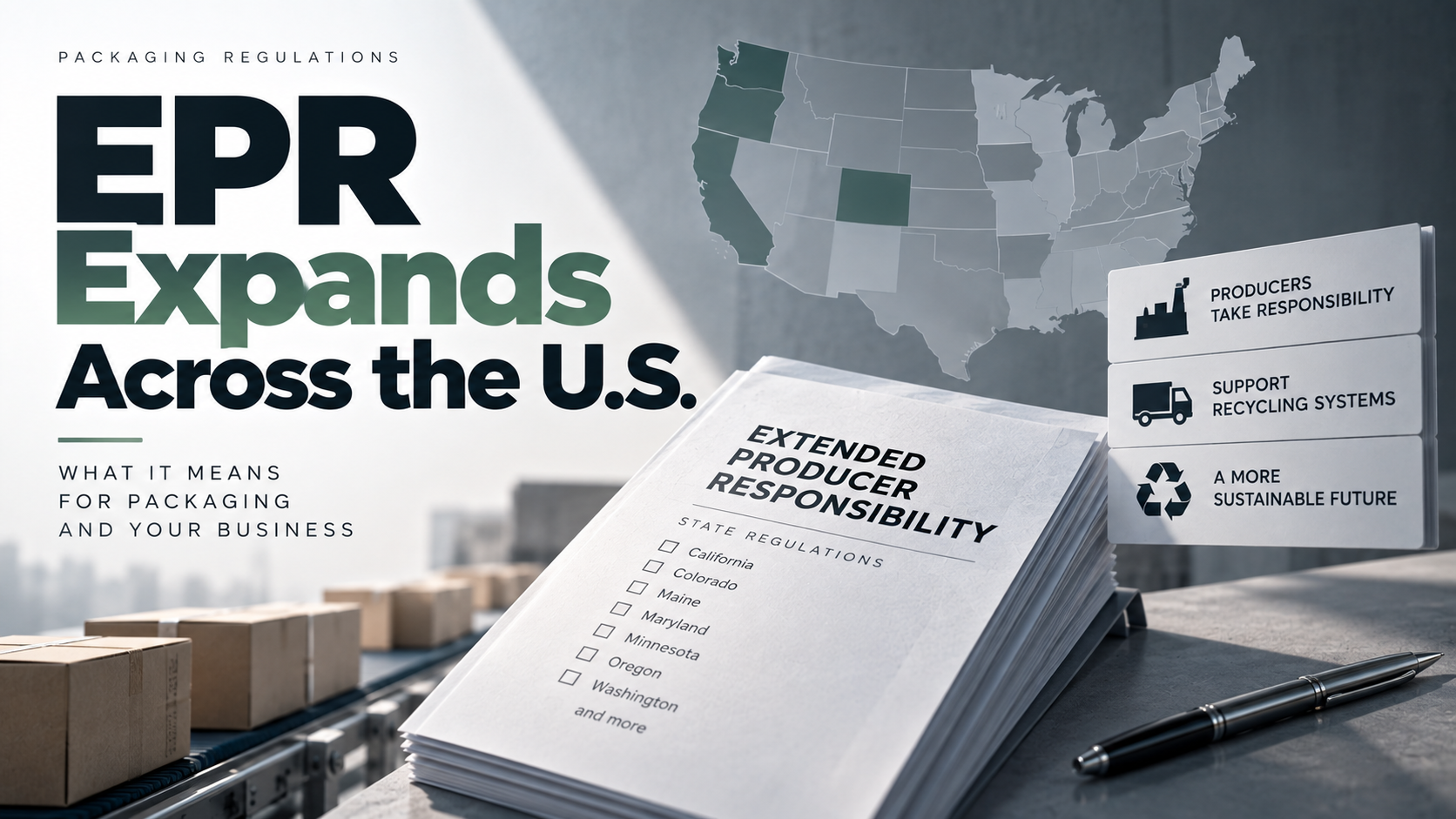
If you've followed packaging or sustainability news in the US this year, you've probably seen the term "EPR" show up more than ever before. Extended Producer Responsibility laws are moving from a handful of early states to a genuine nationwide trend — and the direction they're pushing the industry is becoming clear: toward materials that are easier to recycle, with recycled content increasingly part of that same shift.
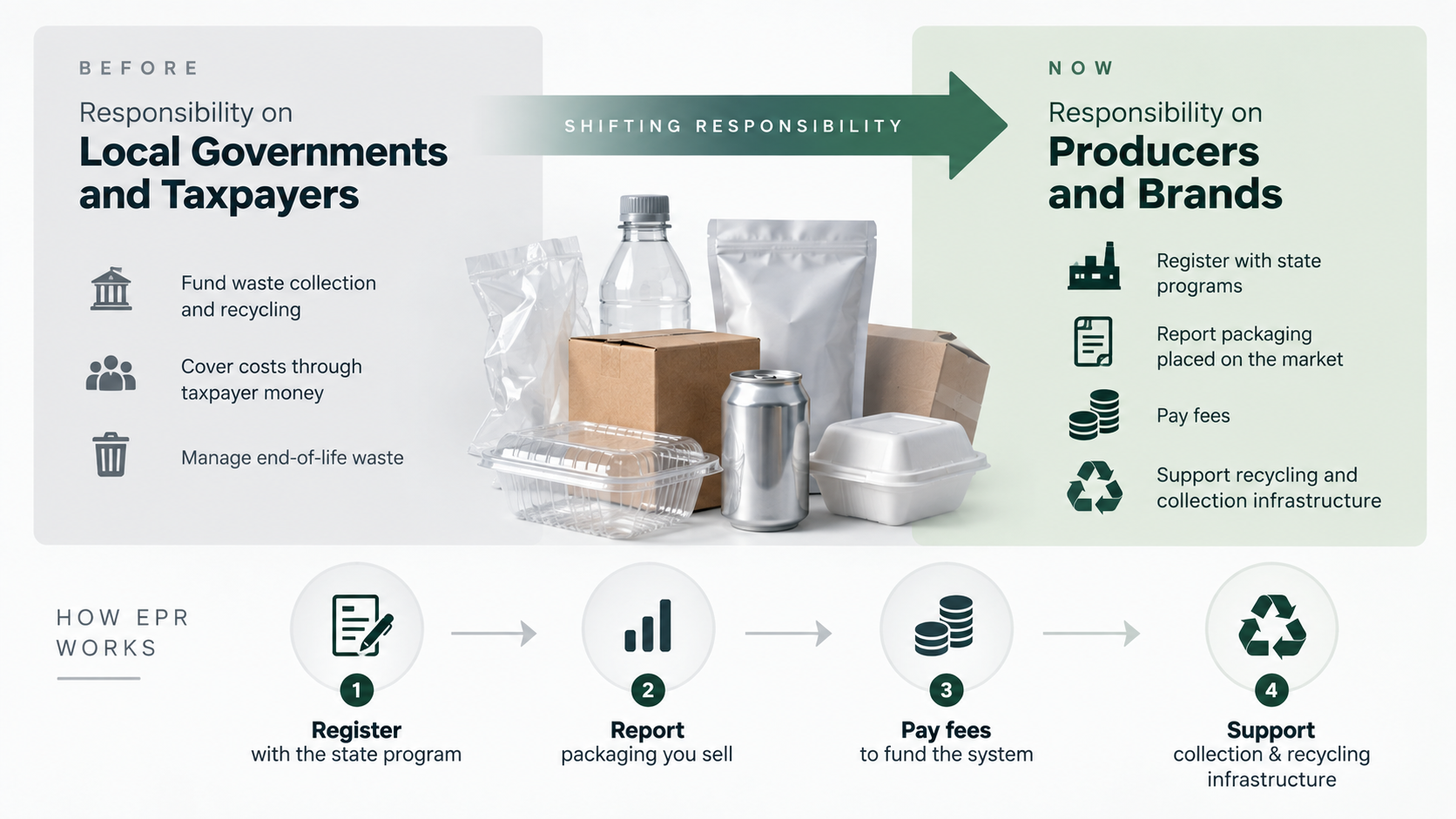
Extended Producer Responsibility (EPR) is a policy model that shifts responsibility for a product's end-of-life impact from local governments and taxpayers onto the businesses that put packaging on the market. In practice, this usually means producers — brand owners, manufacturers, and in some cases distributors — must register with a state program, report how much packaging they sell, and pay fees that fund recycling and collection infrastructure.
EPR is not new as a concept; it has existed for decades in areas like electronics and batteries. What's changed is how quickly packaging has become one of the most active areas of new EPR legislation.
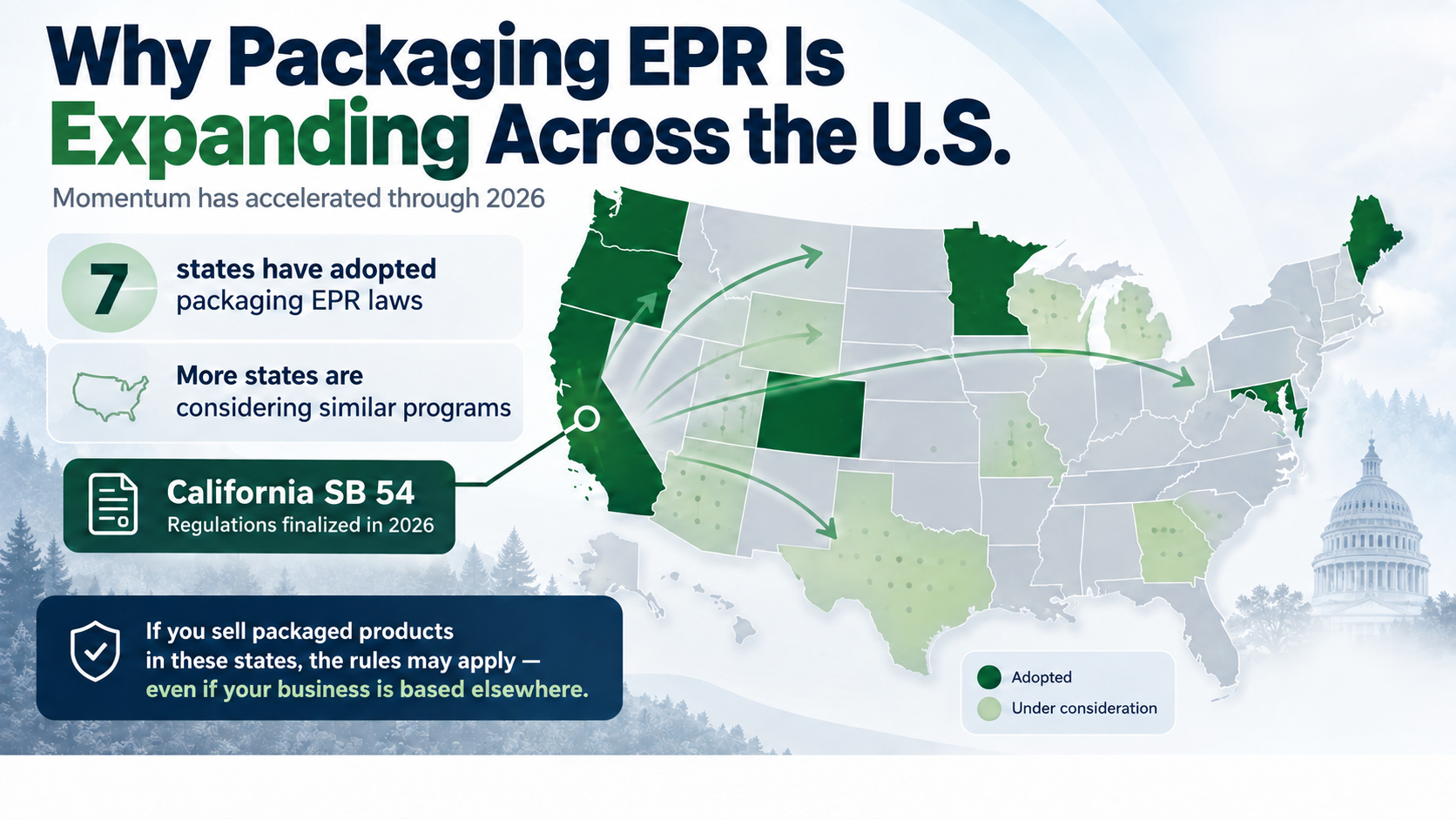
Several states have passed or advanced packaging EPR laws over the past few years, and momentum has only picked up through 2026. California's SB 54 is the program getting the most attention right now: its regulations received final regulatory approval and took effect on May 1, 2026, requiring producers selling packaged goods in California to register with a state-approved producer responsibility organization and work toward long-term reduction and recycling targets over the coming years.
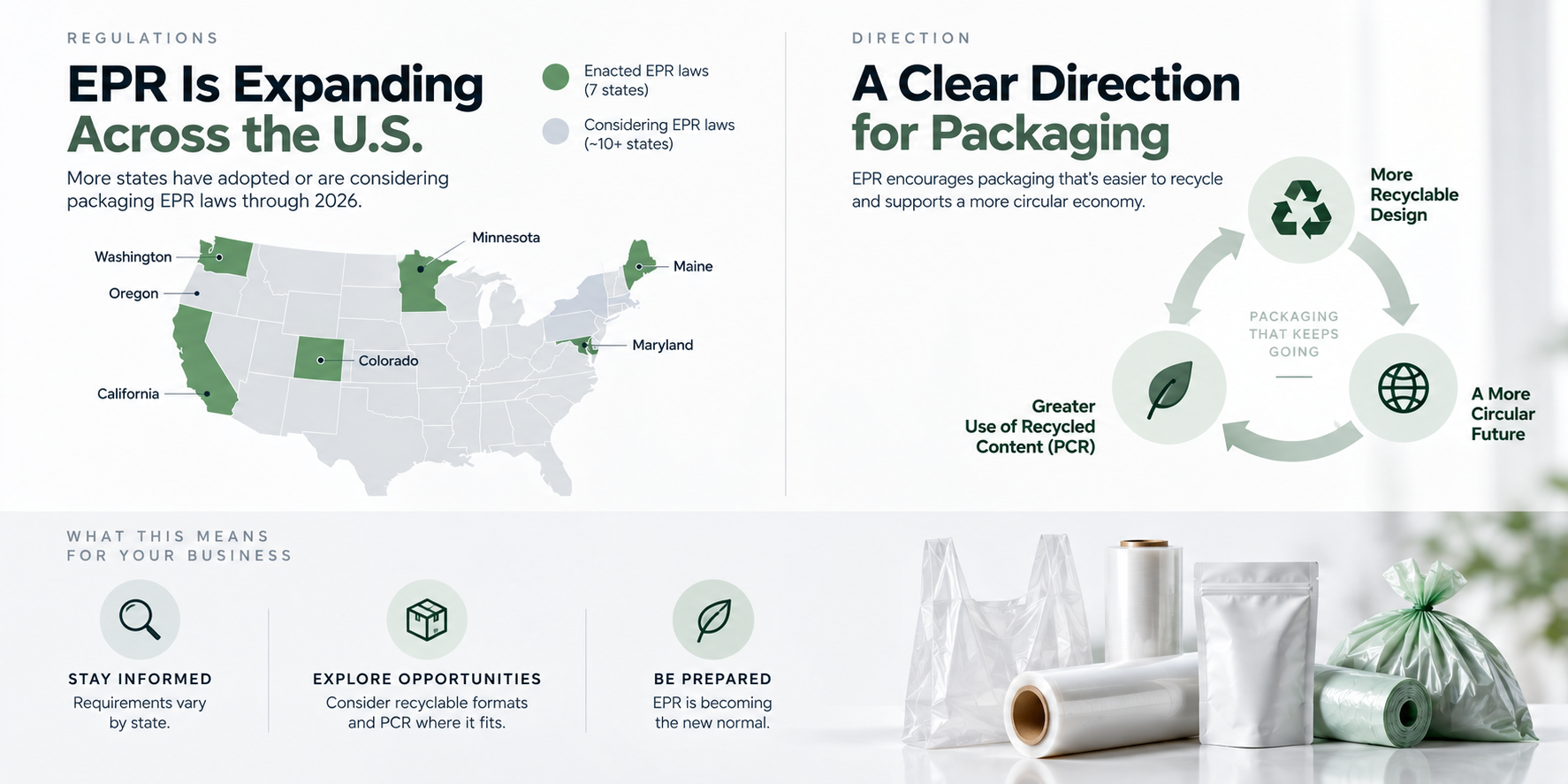
California isn't acting alone. As of 2026, seven US states — California, Colorado, Maine, Maryland, Minnesota, Oregon, and Washington — have adopted packaging EPR laws, and roughly ten more states were in various stages of considering similar programs as of 2025–2026. The practical takeaway: even if a business isn't based in an EPR state, if it sells packaged products there, the rules likely apply.
The clearest signal coming out of these programs is a shift toward more easily recycled packaging. California's SB 54 is a useful illustration: the illustrative fee estimates it published in 2026 — not yet the final, binding fee structure, which CAA is still finalizing for submission to state regulators later this year — already show harder-to-recycle formats and materials carrying noticeably higher fees than more easily recycled ones. Recycled content isn't a standard requirement across EPR programs in general, but it's becoming part of the picture in some places — California's program, for instance, is starting to factor PCR (post-consumer recycled) use into compliance in specific ways, though the details are still being worked out and vary by state. Other states are structuring their own programs differently, but the general direction is consistent across most of them — recyclability, and in some cases recycled content alongside it, is moving from a sustainability preference to a more practical default.
This doesn't mean every spec needs to change overnight. It does mean that reviewing where post-consumer recycled (PCR) content or more easily recycled formats could realistically fit into your packaging mix is becoming a reasonable thing to do now, rather than waiting until a specific state program forces the issue.
A few practical things worth tracking as EPR programs continue to roll out:
- Which states your business sells into.** EPR obligations are typically tied to where packaging is sold, not where your company is headquartered.
- How your current packaging formats are categorized.** Material type and recyclability are the main factors most programs use to assess producers — recycled content isn't a universal requirement, but it's becoming a related factor in some states, including California.
- Whether your suppliers can document certifications relevant to these programs.** Materials available with recognized certifications — such as GRS-certified recycled content or BPI-certified compostability, when using the applicable material — can support the shift toward recycled and recyclable packaging, and are worth reviewing with your supplier.
We'll be tracking specific state programs, including SB 54's rollout, in more detail in upcoming posts.
Have a packaging requirement in mind? Tell us what you're looking for and we'll help identify the right product, material, and supply configuration.
[References]
- PPAI (Promotional Products Association International), "10 States To Watch For New Packaging EPR Laws In 2026" → [Read the Source](https://www.ppai.org/media-hub/10-states-to-watch-for-new-packaging-epr-laws-in-2026/)
- Packaging Dive, "At long last, California publishes SB 54 EPR rules" → [Read the Source](https://www.packagingdive.com/news/california-approves-sb54-regulations/818997/)
- Adept Packaging, "California SB 54 Illustrative Fees Are Out. How to Read Them" → [Read the Source](https://adeptpackaging.com/blog/california-sb-54-illustrative-fees-are-out-how-to-read-them/)
- CalRecycle, SB 54 Packaging EPR regulations — OAL approval, effective May 1, 2026 → [Read the Source](https://calrecycle.ca.gov/packaging/packaging-epr/)